How to Unclog a Kitchen Drain: A Homeowner’s Guide
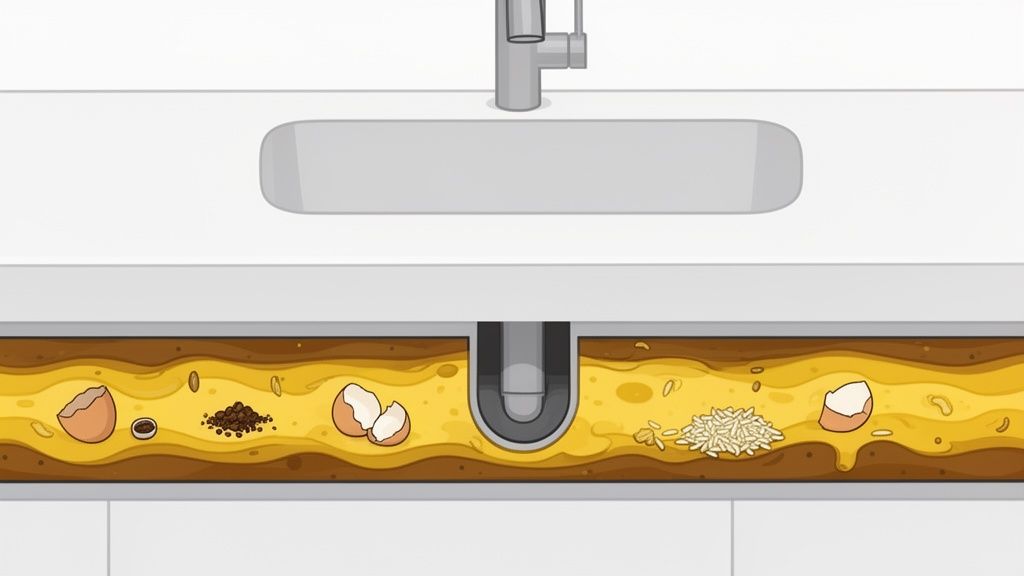
Before you can fix a clogged kitchen drain, you have to understand what you’re up against. That slow drain you've been ignoring didn't just happen overnight. It’s almost always the result of weeks, or even months, of everyday habits that slowly but surely created a blockage deep inside your pipes.
For most homes we visit in Woodstock and Marietta, the problem starts with what you rinse off your plates.
What's Really Causing Your Kitchen Drain Clogs
The number one enemy of any kitchen drain is FOG—that’s fats, oils, and grease. When you wash a greasy pan or scrape an oily plate into the sink, the warm liquid fat seems harmless. But once it hits the cold pipes, it solidifies, creating a sticky, waxy coating.
This buildup acts like flypaper. Every little food particle that follows gets trapped, and the clog grows bigger and more stubborn over time.
It’s no exaggeration to say this is a huge problem. In fact, FOG is the culprit behind as many as 80% of all kitchen drain blockages we see. It’s a simple mistake that can lead to a major headache and the need for professional drain cleaning in Cumming.
The Sneaky Clog Culprits
Grease is the main villain, but it usually has a few partners in crime. Several other items that seem innocent enough are notorious for causing backups, especially when they mix with that sticky FOG buildup.
Here’s a quick look at what’s blocking your drains and how to stop it.
| Your Guide to Common Kitchen Clog Culprits | ||
|---|---|---|
| Clog Culprit | How It Blocks Drains | Simple Prevention Tip |
| Coffee Grounds | They don't dissolve. Instead, they clump together inside the grease coating, forming a thick, sludgy mess that’s tough to break up. | Scrape used grounds into the trash or compost bin, not the sink. |
| Starchy Foods | Things like rice, pasta, and potato peels swell up when they absorb water. A few grains can expand inside the P-trap, creating a solid plug. | Always scrape starchy leftovers into the trash can before rinsing the plate. |
| Eggshells | The sharp, hard fragments get snagged in the existing grease. The thin inner membrane can also wrap around garbage disposal blades, making jams worse. | Toss eggshells in the trash or add them to your compost pile. |
These everyday items are far more damaging than most people realize. The combination of grease and these other materials creates a clog that a simple plunger often can't handle.
A persistent sewage smell is another huge red flag. That odor is caused by food and bacteria decaying inside your pipes. It's not just unpleasant—it's a clear signal that a serious blockage is forming and releasing foul gases back into your kitchen.
If you’re dealing with nasty odors, you may have more than just a slow drain on your hands. Learning about fixing bad smells coming from your kitchen drain can help you figure out if it’s a quick fix or a symptom of a much larger clog.
For homeowners in Canton and Acworth, knowing these common causes is the best way to prevent future clogs. But if a backup has already taken hold and you can’t get it cleared, it might be time to find a professional for drain cleaning near me.
Simple DIY Fixes You Can Try Right Now
That dreaded gurgle from the kitchen sink… we've all been there. When the water starts backing up, your first instinct might be to call for an "emergency plumber in Woodstock GA." But before you pick up the phone, take a deep breath. Many minor clogs are surprisingly easy to handle on your own.
These tricks are perfect for breaking up fresh gunk like grease or small food scraps. Best of all, they won’t damage your pipes the way harsh liquid drain cleaners can.
Start with Boiling Water
For a clog caused by recent grease buildup, sometimes the simplest solution works wonders. Carefully pour about a half-gallon of boiling water straight down the drain. The intense heat can often melt away grease that has started to stick to your pipes, letting everything flow freely again.
But hold on—before you grab the kettle, there's a huge catch. Never pour boiling water into PVC pipes. The heat can soften or even warp the plastic, turning a simple clog into a much more serious repair job. If you have metal pipes, though, this is a great, safe first move.
Master the Plunger Technique
If hot water doesn't cut it, it's time to bring out the plunger. The key is to use the right kind—a flat-bottomed cup plunger is what you need for a kitchen sink. It creates the perfect seal on a flat surface.
Getting the technique right is everything:
- Working with a double sink? This is a common setup in homes across Alpharetta and Roswell, and it’s a classic rookie mistake. You have to block the other drain. Just stuff a wet rag in it to create a seal. This ensures all the pressure goes right where you need it: down the clogged pipe.
- Add some water. Run a few inches of hot water into the clogged basin, just enough to cover the rubber cup of the plunger. Water is crucial for creating the suction you need to dislodge the blockage.
- Plunge with purpose. Place the plunger firmly over the drain and give it about 20-30 seconds of strong, vigorous pumps. When you break the seal, that pop of suction is what should pull the clog loose.
Use a Natural Baking Soda and Vinegar Solution
For a gentler approach that's still surprisingly powerful, look no further than your pantry. This classic baking soda and vinegar combo is much safer on plumbing than store-bought chemicals, especially in the older homes you find throughout Cobb County and Cherokee County.
First, get any standing water out of the sink. Pour one cup of baking soda directly down the drain, and follow it up with one cup of white vinegar. Immediately pop the drain stopper on top to trap the fizzing reaction inside the pipes.
Let that mixture bubble and work its magic for at least 15 minutes. The chemical reaction is fantastic at breaking down grime and food buildup. Once the time is up, flush it all out with hot tap water.
This little science experiment can be incredibly effective on smaller clogs. Of course, preventing clogs is always the best strategy. Thinking about what goes down your drain, from food scraps to cleaning products, can make a huge difference. For example, finding effective dishwasher tablet substitutes can reduce the amount of residue that builds up over time.
If you’ve tried these fixes and the drain is still slow, it’s a sign that the problem might be deeper in the line. That’s when it’s time for professional drain cleaning.
Tackling Tougher Clogs Yourself
So, you’ve tried boiling water and your trusty plunger, but the drain is still stubbornly slow or completely stopped. That usually tells me the clog isn't just a simple bit of fresh buildup. We're likely dealing with something more serious, either packed into the P-trap—that U-shaped pipe right under your sink—or hiding further down the drain line.
Don't panic. It's time to roll up your sleeves and get a little more hands-on. This isn't as scary as it sounds, and with a couple of basic tools, you can often knock out these tougher clogs yourself without needing to call for a drain cleaning service in Marietta just yet. A little patience here can save you a service call, but you have to work carefully to make sure you don't turn a small problem into a big, wet mess.
These initial steps are what most folks try first before moving on to the methods we're about to cover.
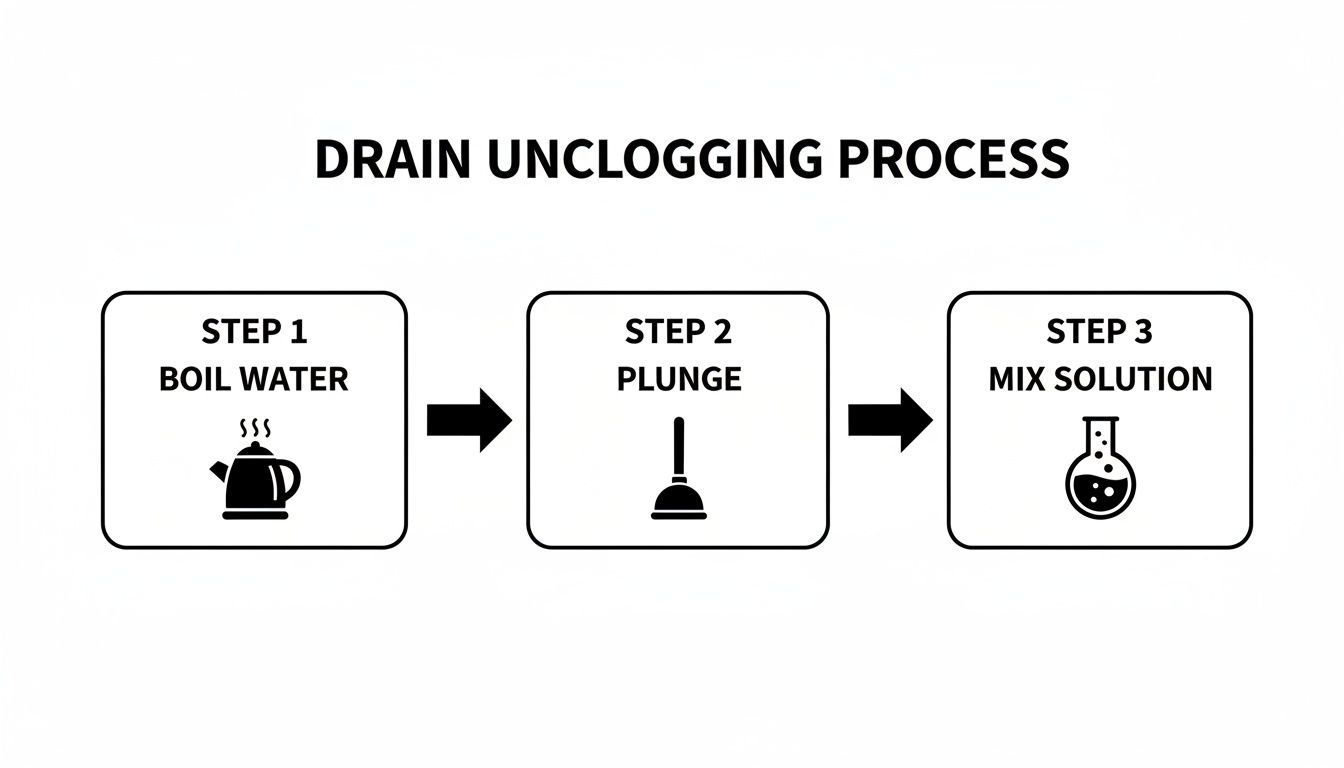
While these are always worth a shot, their power fades fast once a clog gets really compacted or travels deeper into your home's plumbing.
Cleaning Out the P-Trap
That U-bend under your sink is the P-trap. Its main job is to hold a little bit of water to block sewer gases from creeping into your kitchen. Unfortunately, that curve is also the perfect spot for grease, heavy food scraps, and all sorts of other gunk to get caught and build up into a solid blockage.
Here's what you'll need to clean it out:
- A bucket or a big bowl you don't mind getting dirty
- Channel-lock or slip-joint pliers
- Some old towels and a pair of rubber gloves
First things first, get that bucket situated directly underneath the P-trap. Trust me, it’s going to catch some nasty water and sludge you don't want on your cabinet floor. Now, grab your pliers and loosen the two large slip nuts holding the trap in place—one connects to the sink's tailpiece and the other to the drainpipe going into the wall. Once they're loose, you can usually finish unscrewing them by hand.
Gently pull the trap off and dump its contents into the bucket. You'll probably see exactly what's been causing the backup. Take an old brush and give the inside of that pipe a good scrub to clear out all the accumulated slime. Before you put it all back together, peek into the pipe leading into the wall to see if you can spot any more blockages.
When you reconnect the P-trap, tighten the nuts by hand first. Then, give them just a final quarter-turn with the pliers. You want a snug, leak-proof seal, but overtightening can crack the plastic.
Using a Drain Snake for Deeper Blockages
If you cleaned the P-trap and it was mostly clear, your clog is lurking further down the line. This is where a drain snake, sometimes called a manual auger, is your new best friend. It’s essentially a long, flexible cable you feed into the pipe to either break up the blockage or pull it out.
With the P-trap still removed, guide the tip of the snake into the drainpipe that goes into the wall. Keep feeding the cable in gently until you feel it stop—you've found your clog.
Once you hit that resistance, lock the cable in place and start turning the handle clockwise. As you turn, the auger's corkscrew tip will either chew through the clog or hook into it. If you feel it grab onto something solid, gently pull the snake back out, dragging the clog with it.
You might have to repeat this a few times until the snake can pass through without getting stuck. I won't lie, it can be a hassle, and some clogs just won't budge. In fact, studies have shown that basic methods like plunging only work about 25% of the time on these deeper clogs, and as this article on how often clogged sinks affect homeowners on budgeitdrains.com points out, people lose a lot of time on DIY fixes.
If the snake doesn’t do the trick after a few tries, you could be dealing with a much deeper issue in the main line, which is a job for an expert. At that point, you could be looking at needing a main water line repair in Johns Creek.
Why Chemical Drain Cleaners Cause More Harm Than Good
We get the temptation, we really do. When your kitchen sink is at a complete standstill, grabbing that bottle of chemical drain cleaner off the shelf feels like the quickest path back to normal. The promises on the label sound great—a powerful formula that just melts the problem away.
Unfortunately, from our experience across North Metro Atlanta, that "quick fix" is often the start of a much bigger, more expensive headache.
The very thing that makes those chemicals work is what makes them so dangerous. They're designed to create a powerful chemical reaction, generating intense heat to break down grease and food scraps. The problem? Those harsh chemicals have no idea where the clog ends and your pipes begin.
The Hidden Damage Brewing in Your Pipes
It doesn't matter if your home in Forsyth County has old-school cast iron pipes or modern PVC in North Fulton. We've seen these liquid drain openers cause serious harm to both. The caustic reaction can eat away at metal pipes, creating weak spots that eventually turn into pinhole leaks. For PVC, that same heat can soften, warp, or even crack the plastic.
A single use might not seem like a big deal, but doing it repeatedly is like slowly poisoning your plumbing system from the inside out. We've seen a simple clog turn into an urgent call for a burst pipe repair in Roswell or even a full water line replacement in Marietta because of this.
The risk gets even worse when the cleaner doesn't fully clear the clog, which happens more often than you'd think. Many times, the chemicals just burn a small tunnel through the middle of the blockage. Water might drain slowly for a bit, but most of the gunk is still there.
From a Simple Clog to a Major Repair
Now you've got a pipe filled with a highly corrosive sludge that's just sitting there, day and night, eating away at your plumbing. It's a disaster waiting to happen. I can't tell you how many emergency calls we've gotten in Acworth and Canton where a homeowner used a liquid cleaner, only to have the weakened pipe finally give out weeks later, causing a flood and a frantic search for water line repair near me.
What started as a $15 bottle of drain cleaner can quickly escalate into a project that costs thousands. Suddenly, you're not just dealing with a clog; you're looking at a sewer replacement or a major main water line repair near me.
And that's not even touching on the safety risks. If the chemicals fail and you decide to use a plunger afterward, you can get a dangerous splashback of caustic liquid. These are not chemicals you want anywhere near you.
- Chemical burns: Just a small amount on your skin or in your eyes can cause a severe injury.
- Toxic fumes: The reaction releases fumes that are genuinely harmful to breathe, especially in a small space like a kitchen or bathroom.
- Damaged fixtures: We’ve seen permanent stains and etching on beautiful stainless steel sinks and chrome faucets from a single splash.
Instead of reaching for that bottle, there are safer DIY methods you can try. And if those don't work, calling for a professional drain cleaning in Johns Creek is always the smarter, safer bet for your home and your family.
Signs You Need to Call an Emergency Plumber
You’ve tried all the DIY tricks. You might have even gotten your hands dirty taking apart the P-trap, but that kitchen sink is still giving you trouble. Sometimes, what looks like a simple clog is actually a warning sign for a much bigger headache brewing deeper in your pipes.
Knowing when to throw in the towel and call a professional is the smartest move you can make. It can be the difference between a small repair bill and a full-blown plumbing disaster.
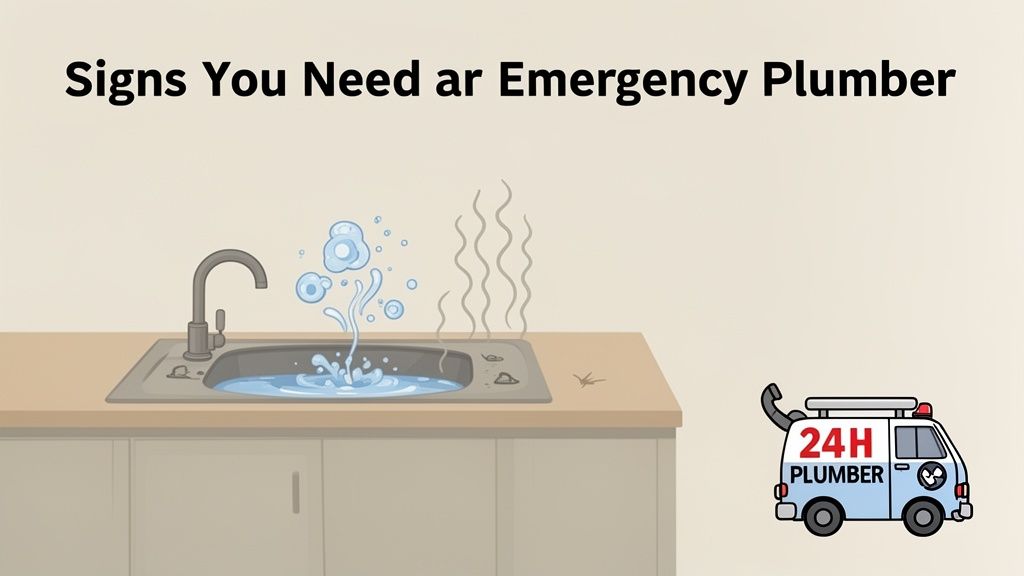
If any of the following situations sound familiar, it’s time to stop what you’re doing and find an emergency plumber in Woodstock or your local area. These aren't just stubborn clogs; they're symptoms of a system-wide problem that needs an expert.
Widespread Backups and Gurgling Sounds
Here's the real tell-tale sign: the problem isn't isolated to just one sink.
Does flushing a toilet cause water to bubble up in your kitchen sink? Maybe a clogged toilet won’t flush and simultaneously makes the laundry room drain back up? This is a classic indicator of a sewer backup. The blockage isn't right under your sink; it's in the main sewer line that your entire house relies on.
That gurgling you hear isn't random. It’s the sound of trapped air being forced around a major obstruction. At this stage, no amount of plunging will fix it. You need professional sewer repair in Roswell or wherever you're located, and you need it fast.
When the main line is clogged, all the wastewater from your home has nowhere to go. It’s forced back up through the lowest drains, which is not only a huge mess but a serious health hazard. This situation requires an immediate call to a 24 hour plumber.
We're seeing these issues more often as Metro Atlanta grows. The demand for drain solutions is expected to become a $3,380 million industry by 2032, partly because new construction and renovations are straining older plumbing systems that weren't built for this capacity. Learn more about these market dynamics and plumbing trends.
Foul Odors and Recurring Clogs
Another big red flag is a persistent, foul smell you can't get rid of. If a sewage smell is wafting up from your drains no matter how much you clean, it's not just leftover food. That's sewer gas being pushed back into your home, which points to a deep clog or a problem with your plumbing vents. Other signs of a serious problem include low water pressure throughout the house or finding unexplained water in your yard.
What about a clog you just can't seem to beat? If you clear it only to have it come right back in a few days or weeks, you're not solving the real problem. You're likely just poking a small hole in a larger, solidified mass of grease and gunk. Our team sees this constantly in homes across Johns Creek and Cumming.
For these kinds of stubborn, deep-seated clogs, we bring out the heavy-duty equipment for hydro-jetting. This process uses extremely high-pressure water to scour the inside of your pipes clean, blasting away years of buildup. It’s a real, long-term solution, not a temporary band-aid. Don’t wait for a sewer backup to flood your kitchen—if you notice these signs, it's time to call a pro.
Answering Your Kitchen Drain Questions
Even after you’ve given it your best shot, some drain problems can leave you scratching your head. We get calls all the time from homeowners in Woodstock, Acworth, and across North Metro Atlanta with these exact issues. Here’s our take on a few common questions to help you figure out what’s happening in your sink.
"My Garbage Disposal Is Humming, but Nothing's Happening. What Now?"
That humming noise is a classic sign of a jam. The motor wants to work, but the blades are stuck.
First things first: turn off the power to the disposal at the circuit breaker. Never, ever stick your hand or anything else down the drain until you are 100% sure the power is off.
Now, take a look underneath your sink. At the very bottom of the disposal unit, you should find a small, hexagon-shaped hole. Most disposals come with a special Allen wrench for this, but if you've lost it (like most of us do), a standard Allen wrench set will have the size you need. Fit the wrench in and crank it back and forth. This manual movement is usually all it takes to break free whatever's causing the jam.
Once it moves freely, take the wrench out and flip the breaker back on. Run some cold water and give the disposal a quick test. If it’s still just humming or dead silent, the problem might be a fried motor or an electrical fault. At that point, it’s best to call in a pro for leak repair in Alpharetta to diagnose it safely.
"How Do I Keep My Kitchen Drain from Clogging Up Again?"
Honestly, the best approach to drain cleaning in Canton is preventing the clog in the first place. It really just boils down to being more careful about what you let go down the sink.
- Scrape every plate: Before rinsing, scrape all food scraps into the garbage can. Things like pasta, rice, and coffee grounds are notorious for causing clogs.
- Grease belongs in the trash: Never pour cooking grease, fats, or oils down the drain. Pour it into an old can or jar, let it harden, and then toss the whole thing in the bin.
- Use a simple mesh strainer: It’s a cheap and easy way to catch all the gunk and food particles that would otherwise build up in your pipes.
- Flush it out: After using your disposal, let cold water run for at least 20-30 seconds. This helps push all the debris completely through your pipes and into the main sewer line.
"Is It a Bad Idea to Plunge a Sink After Using a Chemical Cleaner?"
Yes, this is incredibly dangerous. Please do not do this. When a chemical drain opener doesn't work, it means that caustic, toxic liquid is just sitting in your pipe, trapped by the clog.
Plunging forces air and water down the pipe with a lot of pressure. That same pressure can easily cause the trapped chemicals to erupt back out of the drain, splashing onto your skin, in your eyes, and all over your kitchen. The resulting chemical burns can be severe.
If you've already used a chemical cleaner and the sink is still blocked, your DIY journey is over. Don't add anything else or try any other methods. The very next thing you should do is call an emergency plumber in Marietta. Make sure you tell them you used a chemical cleaner so they can come prepared with the right safety gear. This is one problem you absolutely want a professional to handle.
When your DIY efforts hit a wall or a real plumbing emergency strikes, you need help you can count on. For anything from a stubborn kitchen clog to a full sewer replacement in Roswell, or if you have no hot water and need a water heater replacement in Alpharetta, the team at JMJ Plumbing is ready to help 24/7. Schedule your service online or call us for immediate assistance!